Artificial intelligence dominates headlines, investor briefings, and policy debates. Yet for all the talk of algorithms and training runs, the true engine of the AI revolution remains stubbornly physical. It is built in concrete, cooled by liquid immersion systems, powered by dedicated nuclear microreactors, and threaded together by fiber-optic cables that stretch across continents and ocean floors.
What began as a niche computational need has escalated into a global infrastructure arms race. Hyperscalers, energy conglomerates, chipmakers, and sovereign wealth funds are collectively deploying hundreds of billions of dollars to secure the foundational layer of the next computing epoch. The question is no longer whether AI will transform industry and society, but whether the physical world can scale fast enough to keep pace.
The Data Center Tsunami
Modern AI workloads don't just require more computing power; they demand entirely new architectural paradigms. Traditional server racks, designed for distributed web services, are being replaced by massive, tightly coupled GPU clusters. A single training run for a frontier model can consume over 100 megawatts of continuous power and require thousands of specialized accelerators operating in lockstep.
The result is a geographic and economic realignment. Regions once overlooked for their lack of urban infrastructure are now prime real estate. The Carolinas, Texas, Northern Virginia, and parts of Eastern Europe are seeing data center pipelines that rival mid-sized cities. Construction cranes where there were once cornfields have become a signature of the new economy.
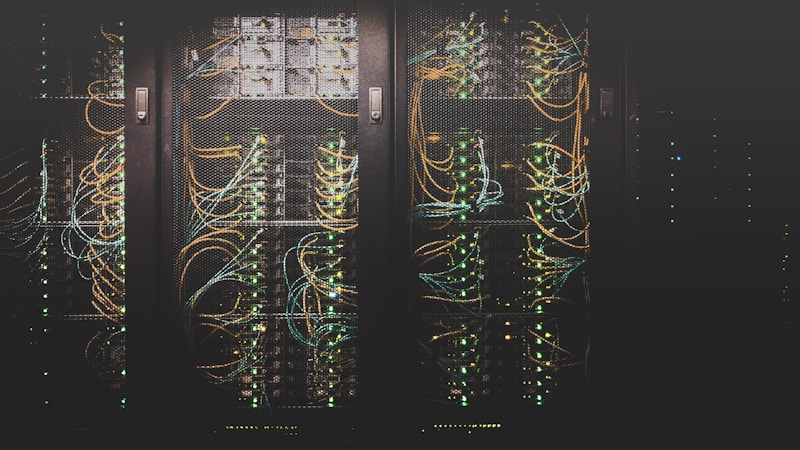
But scale brings friction. Local communities are pushing back against water consumption, traffic, and tax implications. Grid operators are struggling to route enough power to remote sites. The industry's answer has been to bundle infrastructure deals with municipal promises, but the tension between speed and sustainability remains unresolved.
The Silicon Straitjacket
At the heart of every AI cluster lies the accelerator chip. While Moore's Law provided steady improvements for decades, AI workloads demanded a different kind of evolution: specialized architectures optimized for matrix multiplication and memory bandwidth. The result was a concentrated market dominated by a handful of players, creating a bottleneck that transcends software.
High-bandwidth memory (HBM) has become the new oil. The race to produce 3D-stacked memory that can feed GPUs without starving them has led to unprecedented foundry expansions. Yet yield rates remain problematic, and the geopolitical reality of semiconductor manufacturing means that supply chains are as fragile as they are critical.
Chip Market Snapshot (2024)
Vertical integration is the industry's response. Major cloud providers are now designing their own silicon, bypassing traditional OEMs. While this reduces dependency, it fragments the ecosystem and raises questions about interoperability and long-term maintenance.
Powering the Paradox
AI promises efficiency, yet its physical footprint is inherently energy-intensive. The irony is stark: models trained to optimize logistics and energy grids require more power to exist than they sometimes help save. This paradox has forced a reckoning between tech giants and the energy sector.
Renewables are part of the solution, but intermittency remains a hard limit. The industry is increasingly turning to natural gas peaker plants as bridge infrastructure, while simultaneously funding advanced nuclear research and long-duration storage. Several major deals have been signed to repurpose existing nuclear plants exclusively for data center loads, effectively privatizing baseload power for computational use.
Cooling, too, has evolved. Air cooling is rapidly being phased out in favor of direct-to-chip liquid cooling and immersion tanks. While these systems improve thermal efficiency and allow higher density, they introduce new maintenance complexities and chemical handling requirements that the workforce is still adapting to.
Geopolitics of the Grid
Infrastructure is never neutral. The AI build-out is reshaping international relations in ways that extend far beyond trade tariffs. Control over rare earth minerals, advanced packaging facilities, and subsea cable landing stations has become a matter of national security.
Export controls, foreign direct investment screening, and subsidy races have turned semiconductor manufacturing into a proxy arena for broader technological sovereignty. Countries that once viewed data centers as commercial real estate now treat them as strategic assets. The lines between corporate capacity and state capability are blurring.
This new reality demands a new kind of oversight. Regulators are scrambling to address environmental impact, data residency, and anti-competitive consolidation. But the pace of deployment often outstrits policy, leaving gaps that markets quickly fill.
What Comes Next
The AI infrastructure rush is not a sprint; it's a marathon with shifting terrain. As models grow more efficient and edge computing matures, the center of gravity may shift from centralized megafarms to distributed networks. But for the foreseeable future, the physical layer will remain the defining constraint.
Investors who understand this will stop chasing algorithmic breakthroughs alone and start mapping the supply chain: the power contracts, the fiber routes, the cooling patents, the memory yields. The companies that win the AI era won't just have the best models; they'll control the pipes, the watts, and the silicon that make them possible.
Aevum News will continue tracking this transformation in real time. The infrastructure rush is the foundation of the next decade. We'll be there to report every phase.