Geneva — In a historic convergence of geopolitics and technology, the Global Quantum Alliance (GQA) announced a comprehensive set of standards for quantum computing security on Tuesday. The framework, developed over three years by leading nations, academic institutions, and technology corporations, aims to establish a secure foundation for the post-quantum era before the technology achieves what experts call "quantum supremacy" over current encryption methods.
The announcement marks a rare moment of international cooperation, as signatories including the United States, European Union members, China, and Japan agreed to share best practices, establish common encryption baselines, and commit to a moratorium on weaponizing quantum decryption capabilities.

Researchers at the CERN Quantum Institute work on stabilizing qubit coherence, a critical step toward scalable quantum processors. (Photo: Aevum News)
The Race Against "Q-Day"
The urgency stems from a phenomenon cryptographers call "Q-Day" — the theoretical date when a quantum computer will become powerful enough to break widely used RSA encryption protocols that protect everything from banking transactions to state secrets. While estimates vary, most experts place this milestone within the next decade.
We are not just preparing for a technological shift; we are architecting the immune system of the digital world for the next century. The standards released today are our vaccine. Dr. Sarah Lin, Chair of the Global Quantum Alliance Technical Committee
Dr. Lin, a pioneering quantum physicist from MIT, emphasized that the window for transition is narrowing. "The computational power required to factor large prime numbers is dropping exponentially. If we do not migrate to post-quantum cryptography now, we risk creating a backlog of vulnerability that will be impossible to manage once Q-Day arrives."
A Unified Framework
The GQA framework, known as Project Aevum — a nod to the timeless nature of the security it seeks to provide — outlines three primary pillars:
- Standardized Algorithms: Adoption of lattice-based and hash-based cryptographic algorithms that have been vetted by independent bodies for resistance against quantum attacks.
- Hybrid Encryption Models: A transitional strategy where systems utilize both classical and quantum-resistant methods simultaneously during the migration period.
- International Auditing: Creation of a transparent, multi-party auditing mechanism to ensure compliance and detect vulnerabilities without compromising national security.
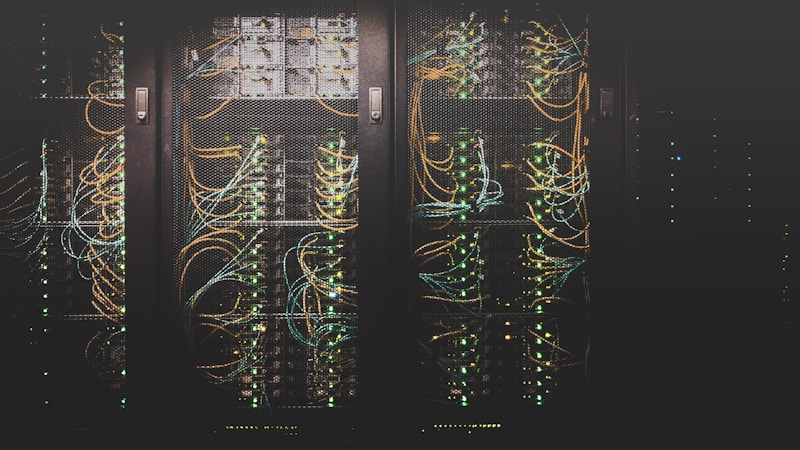
Data centers worldwide will need to upgrade infrastructure to support hybrid encryption models over the next five years. (Photo: Aevum News)
Industry Response and Economic Impact
Technology leaders have largely welcomed the initiative. "This is the clarity the market needed," said Marcus Chen, CTO of Nexus Systems. "Having a unified standard reduces the fragmentation that has plagued cybersecurity efforts for decades. Companies can now invest in transition roadmaps with confidence."
However, analysts warn of the massive economic undertaking required. The Global Digital Infrastructure Report estimates that migrating global encryption systems could cost upwards of $300 billion over the next eight years. This includes software updates, hardware replacements, and personnel training across government and private sectors.
Key Takeaways
What: Global Quantum Alliance announces unified security standards for post-quantum cryptography.
Why: To protect digital infrastructure against future quantum decryption threats.
When: Implementation begins immediately, with full compliance targeted for 2035.
Impact: Estimated $300B investment required globally; prevents catastrophic data breaches post-Q-Day.
Geopolitical Implications
The agreement represents a significant diplomatic achievement. Historically, quantum computing has been viewed through the lens of national security competition, with accusations of espionage and technology restrictions common among major powers.
"The fact that these nations sat at the same table speaks volumes about the existential nature of this threat," observed James Donovan, a policy analyst at the Atlantic Council. "Quantum risks don't respect borders. If one nation's infrastructure falls, the global digital ecosystem suffers. This agreement acknowledges our interdependence."
Critics, however, remain skeptical. Privacy advocates have raised concerns about the auditing mechanisms, fearing they could be leveraged for mass surveillance. "We need to ensure that the shield we build doesn't become a cage," warned Elena Korb, director of Digital Rights Watch. "Transparency and civil liberties must be baked into the GQA framework from day one."
What Lies Ahead
As the dust settles on the Geneva announcement, the race to implement has already begun. Governments are drafting legislation, corporations are allocating budgets, and academic institutions are accelerating research into next-generation quantum-resistant materials.
For Aevum News, the story of quantum security is just beginning. We will continue to track the development of Project Aevum, providing in-depth analysis on the technological, economic, and political dimensions of this transformative moment in human history.


